
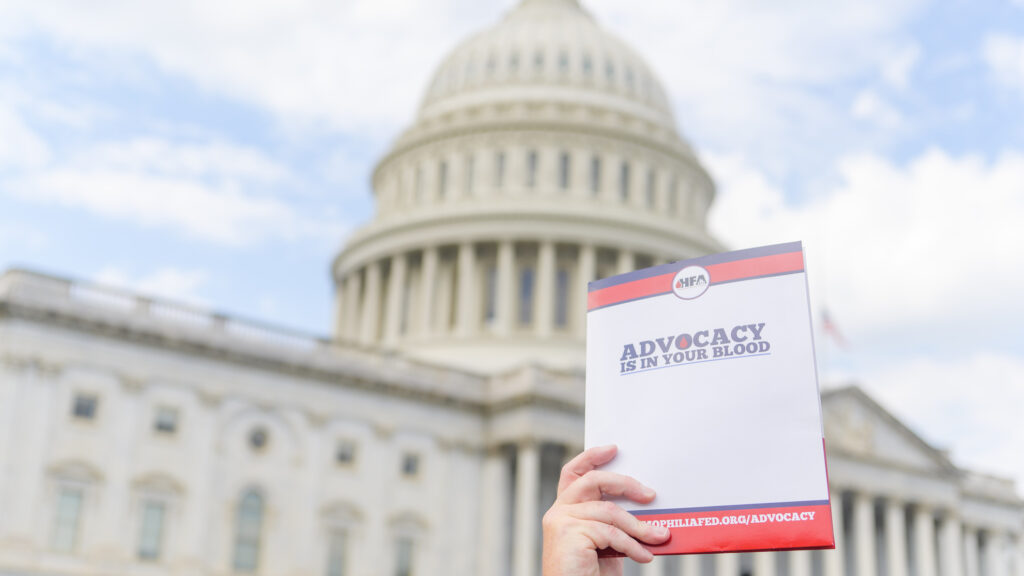
2025 has seen an incredibly active start to the year, with a new Presidential Administration, a refocused Congress under slim Republican control, and a firehose of new presidential actions (or executive orders – “EOs” for short).
A New Administration (Again)
On January 20th, Donald Trump once again took office as the President of the United States alongside his Vice President, JD Vance. Within their first three weeks, they have issued over 45 new EOs which have included:
- Declaring an energy emergency,
- Withdrawing the United States from the World Health Organization,
- Issuing a freeze on regulatory actions,
- Classifying biological sex in government use,
- Ending Diversity, Equity, Inclusion, and Accessibility programs, and
- Revoking over 75 previous Biden-era EOs, some of which covered drug costs.
Additionally, as HFA recently notified our community the Office of Management and Budget (OMB) circulated a memo instructing a halt on all federal grant and loan programs, requiring that they be subject to scrutiny as to whether they promote Diversity Equity, Inclusion, and Accessibility (DEIA), promote gender ideology, and more. Listed within that funding freeze among many others were:
- Ending the HIV Epidemic for America – Ryan White HIV/AIDS Program,
- Ryan White HIV/AIDS Dental Reimbursement Program,
- Blood Disease Resources Research, and
- Blood Disorder Program Prevention, Surveillance, and Research.
In our opposition to freezing these programs, we recently asked members of the community to take action, resulting in an outpouring of support. Over 500 messages to Congress were sent out as of February 5th, including tover 200 lawmakers across the House and Senate!
A New Congress Eyes the Budget
While the Trump Administration has begun its second term in the Oval Office, the 119th Congressional landscape has also shifted, with both the Senate and House of Representatives moving to the right.
The Senate is now a Republican majority with 53 seats held by the party, 2 seats held by independents, and 45 seats held by Democrats. In the House, Republicans have a slight majority of 218 seats vs. 215 for Democrats, and 2 remaining vacancies for Florida seats. Overall, there are 9 new Senators (5R, 4D) and 63 new Representatives (33D, 30R). While the Senate will enjoy greater ease in passing its bills this year, the House will face bigger hurdles, requiring some to attempt compromise.
Aside from the Trump Administration’s recent actions, influential members of the Republican Party have expressed a strong desire to cut government costs in order to reduce the current $710 billion deficit, and $36.22 trillion national debt. In that pursuit, there have been ongoing talks to use the budget reconciliation process, which avoids the filibuster, or a supermajority vote requirement (2/3rds of the members vs a simple majority) to more quickly cut federal spending outside of the regular legislative process. For context, this was the same process used to pass the Inflation Reduction Act of 2022. Obtained by Politico, early proposals this year suggest cuts to a variety of spending, including $2.3 trillion in Medicaid spending and $151 billion in Affordable Care Act spending.
In terms of legislation outside the budget, several bills have already been introduced this year surrounding healthcare and coverage, including:
- An attempt to repeal the Affordable Care Act,
- A bill to expand the 340B Drug Program to rural emergency hospitals,
- An expansion of refundable tax credits for health plans, and
- A ban on prior authorization requirements.
While one of HFA’s top priorities last year, the HELP Copays Act, has not yet been reintroduced, we expect it to receive sponsorship and be introduced again in the coming weeks.
What’s the Connection to Bleeding Disorders?
These first few weeks of 2025 have presented a lot to digest, and the federal government currently has a lot on its plate. It can sometimes feel like the voice of communities like ours is lost in the shuffle or that bigger stories receive more of the focus, but it’s important to remember that oftentimes, issues may rise to high levels of public discussion which seem at first glance like they don’t impact us, but they do.
If federal funding for the HIV/AIDS and Blood Surveillance programs mentioned in the Trump Administration’s funding freeze is cut, it could negatively impact many members of our community who still use blood-derived products or who continue to suffer from HIV/AIDS contracted during the 1980s crisis. The rolling back of DEIA programs and protections by the Trump Administration can negatively impact the employment opportunities of many in our community, making it more difficult to find jobs. Cuts to Medicare or Medicaid could have severe impacts for bleeding disorder patient coverage and could see tens of millions of other enrollees lose coverage, and cuts to programs like the Enhanced Premium Tax Credit could result in between 2.5 million and 3.8 million Americans losing health coverage and/or facing increased premium costs through regular health plans.
In public policy and in federal legislative pursuits, including spending cuts, there is often a shift away from real patient lives and experiences to data points. In public conversation, this results in the use of simplified language like “we need to cut spending,” or “we need to reduce the welfare state.” The problem is that for our community and for many others around the country, our lived experience is so much more than a data point, and so much more than a simple sound bite. The lives of every member of the bleeding disorders community are rich, complex, and matter to the health of our country and its success as a nation.
It’s vitally important that we don’t forget the real impact of the words, actions, and data used by lawmakers and in the public sphere. While HFA works to improve access to quality health coverage, safe and effective treatments, and affordable care, we need your voices to ensure that the real experience of people with bleeding disorders isn’t lost.
Your Role in Our Continued Work
HFA’s efforts need amplification from your stories to protect and empower the entire bleeding disorders community. Raise your voice to be heard with HFA today by:
- Joining HFA’s Advocacy Network
- Contact members of congress to block Trump’s funding freeze or
- Contacting your legislator about the Enhanced Premium Tax Credit.
Also, be sure to stay up to date with our next Word from Washington post and State of the States posts here, and encourage your friends, family, and local bleeding disorders chapter to support us in this work!


 English
 Español de Puerto Rico